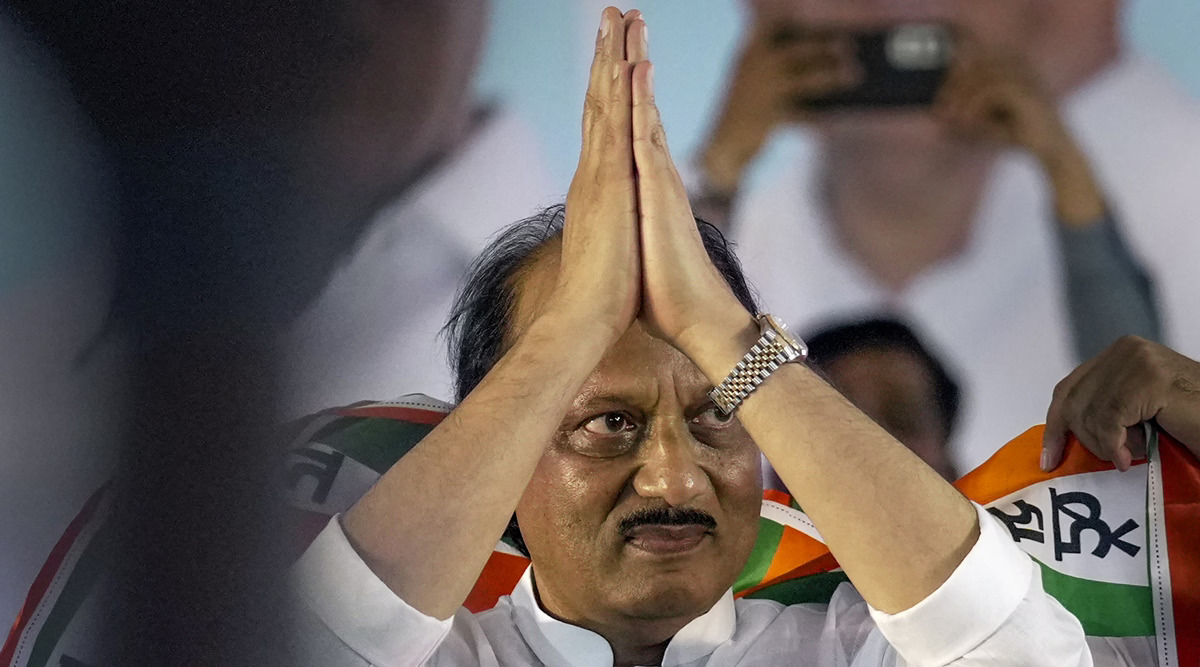
Ajit Pawar, 66, the deputy chief minister of Maharashtra and one of the most influential political figures in the state’s rural belt, died today, on January 28, when the Learjet 45 he was travelling in crashed while attempting to land at Baramati. The accident killed all five people on board, including two staff members and two crew. The cause of the crash is under investigation. The immediate official response reflected the gravity of the event: the Maharashtra government announced three days of state mourning, and obituary references were made in the Lok Sabha.
Ajit Pawar was not merely a senior minister but a central figure in a prolonged period of political churn in Maharashtra. A member of the Pawar family’s second generation, he spent decades building an independent base across the sugar-growing districts of western Maharashtra. Over multiple electoral cycles, he emerged as a decisive force in coalition negotiations, often shaping government formation behind the scenes. Since 2023, he has led a breakaway faction of the Nationalist Congress Party and aligned it with the Eknath Shinde-led government and the BJP, becoming deputy chief minister. That split fundamentally altered the state’s party structure and is key to understanding the scale of the political vacuum created by his death.
Immediate consequences
The most immediate impact is administrative. The state cabinet loses one of its two deputy chief ministers, and the question of succession is inherently political. In a coalition government, filling such a vacancy is not a routine exercise but a signal of balance among allies. Chief Minister Eknath Shinde and the BJP leadership will treat the decision as both a governance requirement and a negotiation point. In the short term, the government’s focus will be on maintaining administrative continuity while projecting stability during a period of public mourning.
Succession within Ajit-faction and NCP
Ajit Pawar’s death immediately sharpens the question of leadership within the NCP faction he headed. Since the 2023 split, his authority and organisational control in parts of western Maharashtra had held the faction together. With his sudden absence, the group faces an urgent contest for leadership. Potential claimants include members of his immediate family as well as senior party figures who managed local networks under his patronage. While the Pawar surname carries considerable weight, it does not guarantee an uncontested transition. Simultaneously, the rival camp led by Sharad Pawar may view the moment as an opportunity to recover ground in areas where loyalties have remained divided. Early reports in the hours after the crash pointed to both internal jockeying and tentative speculation about possible reconciliation within the wider family.
Electoral arithmetic: by-elections, sympathy and sugar belt
The political effects will be most keenly felt in Ajit Pawar’s stronghold of Baramati and the surrounding talukas of Pune and western Maharashtra. These districts are shaped by the sugar economy, cooperative institutions and local bodies such as zilla parishads, all of which Ajit Pawar influenced for decades. He was travelling to Baramati to campaign for local elections when the crash occurred. Any by-election triggered by his death will test whether his personal vote transfers intact to a chosen successor or fragments among the Ajit faction, the Sharad Pawar camp and other regional players. Indian electoral history shows that sympathy can benefit immediate family candidates, but outcomes depend heavily on candidate selection, organisational discipline and ground-level mobilisation.
Coalition stability and policy implications
At the state level, Ajit Pawar functioned as both a conduit to rural constituencies and a key link between his NCP faction and the BJP-Shinde alliance. His absence weakens that connective role. The BJP and its partners are likely to intensify outreach to local power centres and emphasise continuity in schemes affecting farmers and rural incomes. Policy areas closely associated with Ajit Pawar, including irrigation projects, sugar cooperatives and rural infrastructure, may become arenas of renewed political competition. While the government will stress administrative steadiness, appointments and portfolio allocations will inevitably reflect the need to manage patronage and maintain coalition cohesion.
Family dynamics and the Pawar legacy
The Pawar family has been central to Maharashtra politics for over four decades. Ajit Pawar’s death complicates not only immediate leadership choices but also the longer-term trajectory of the family’s political identity. Analysts are already examining whether personal ties and shared interests could drive a limited rapprochement between the rival camps, or whether entrenched local rivalries will deepen fragmentation. Public sentiment in Baramati and within the sugar cooperative network will play a significant role in determining how the legacy is carried forward.
What to watch next
Three developments will be critical. First, the speed and clarity with which Ajit Pawar’s faction settles on a successor and fields candidates for any by-elections. Second, how the Shinde-BJP leadership reallocates portfolios and influence to keep the government stable. Third, whether the Sharad Pawar-led camp is able to capitalise organisationally in western Maharashtra or whether the existing machinery of the Ajit faction holds firm. Media coverage in the coming days will reflect not only public mourning but also the early strategic moves of the parties involved.
Conclusion
Ajit Pawar’s death marks a moment of institutional rupture and political recalibration. For the public, it is a sudden tragedy; for political actors, it is a test of organisational strength and strategic judgement. Maharashtra’s politics have been unsettled for several years, and this event is likely to add further volatility. Once the immediate priorities of investigation, official mourning and administrative continuity are addressed, attention will quickly turn to succession, electoral contests and alliance management. Decisions taken in the coming weeks will shape the state’s political landscape well beyond the current electoral cycle.