


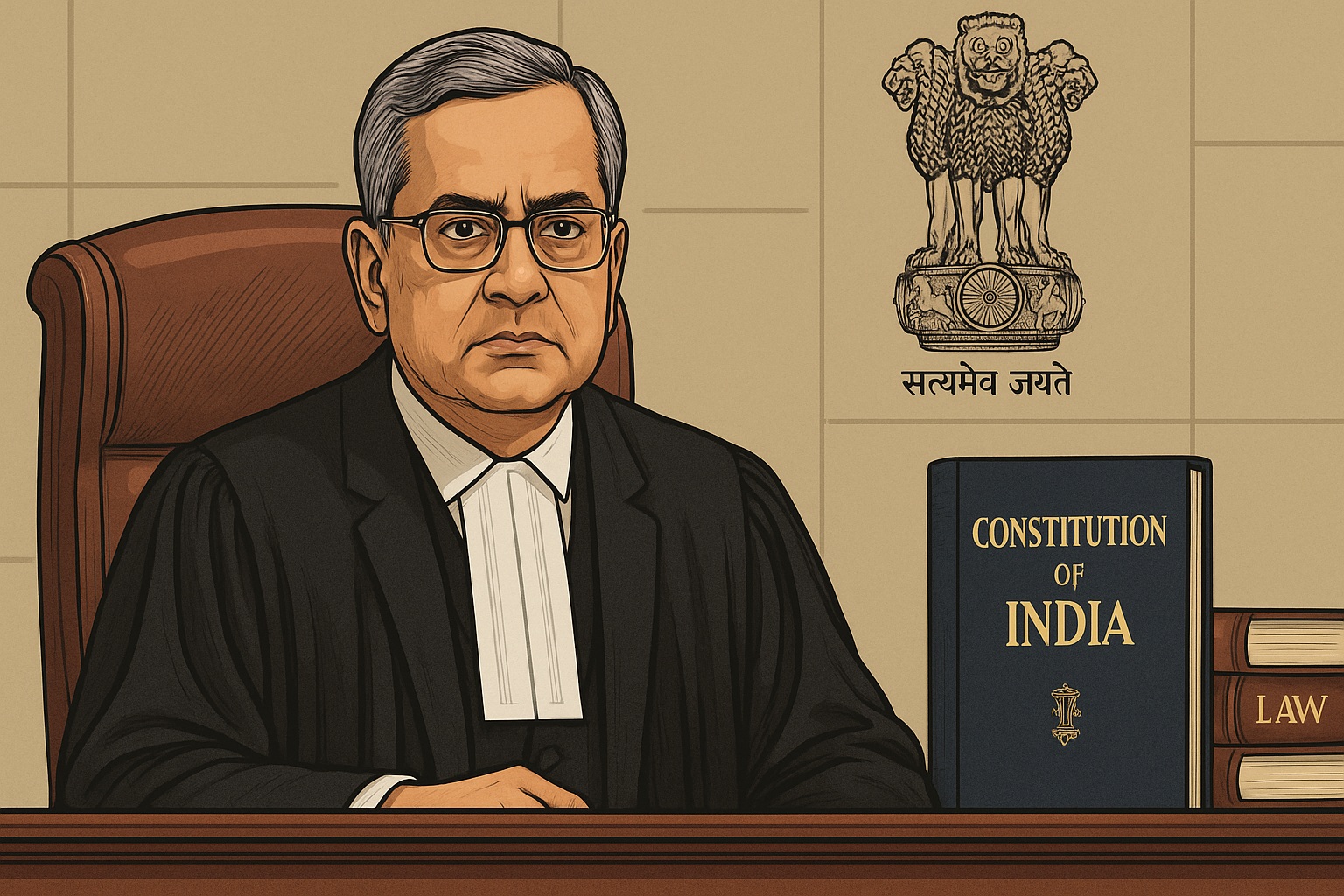
⚖️ Justice Sanjiv Khanna presses Centre for legislative justification while urging petitioners to acknowledge positives in new Waqf law
New Delhi | April 17, 2025:
As Chief Justice of India Sanjiv Khanna nears the end of his tenure, he took a measured yet assertive stance during the hearing on the constitutional challenge to the Waqf Amendment Act, 2025, balancing sharp questions to the Union Government with pointed observations for the petitioners.
In a hearing that lasted over two hours, the CJI-led bench, also comprising Justices Sanjay Kumar and K. V. Viswanathan, scrutinised key aspects of the new law while questioning long-standing practices and legal doctrines.
🔍 Parliamentary Precedent Under Scanner
Chief Justice Khanna directly asked Solicitor General Tushar Mehta to name a precedent where Parliament had allowed inter-faith representation on religious boards, akin to what is being challenged under the Waqf law. Mehta responded evasively, prompting further insistence from the bench.
The Centre pointed to the Bombay Public Trusts Act, 1950, calling it a secular framework that oversees both Hindu and Muslim trusts. However, Justice Viswanathan countered this, stating that the example may not be fully relevant to religious affairs, especially in the context of minority community self-governance.
📜 CJI Questions Removal of ‘Waqf by User’ Doctrine
One of the key areas of concern raised by CJI Khanna was the removal of the “waqf by user” concept—a long-recognized tradition wherein religious use over time grants waqf status to a property.
“We agree with you that there is misuse, but there are also genuine cases of waqf by user. If you are going to denotify waqf by user, it is going to be a problem,” he said, pressing the government for a balanced explanation.
🕰️ Debate on Limitation Act Sparks Legal Discourse
Senior advocate Kapil Sibal, representing the petitioners, challenged the applicability of the Limitation Act to waqf properties—arguing it weakens waqf’s ability to recover encroached lands.
The 1995 Act had exempted waqf properties from time-barred limitations. But the 2025 version reintroduces the Limitation Act, possibly preventing waqf boards from acting against old encroachments.
CJI Khanna, however, said:
“The Limitation Act has both its advantages and disadvantages.”
👪 Inheritance and Religious Practices in Focus
Sibal also argued that the 2025 law infringes on Muslim inheritance laws, especially concerning waqf-alal-aulad (family waqf). The Act clarifies that such waqfs must not deny rightful inheritance, particularly for female heirs.
CJI Khanna rebutted Sibal’s concerns, saying:
“You cannot say that Parliament cannot make a law on inheritance. We have the Hindu Succession Act too.”
Further, Sibal claimed the management of waqfs forms an essential religious practice protected under Article 26 of the Constitution. However, Justice Viswanathan advised against conflating two distinct issues, as the essential religious practice doctrine is itself under review by a larger nine-judge bench.
⌛ With Retirement Looming, CJI Aims for Balance
With only 18 working days remaining before his May 14 retirement, CJI Khanna is attempting to navigate a highly sensitive legal terrain—pushing for transparency, fairness, and constitutional clarity, even as political and religious implications loom large.
🧷 Tags:
#WaqfAct2025 #SupremeCourt #CJIKhanna #ReligiousFreedom #WaqfByUser #KapilSibal #LimitationAct #InheritanceLaw #EssentialReligiousPractice #Article26 #SecularLaws #IndiaLegalNews #ConstitutionalDebate